

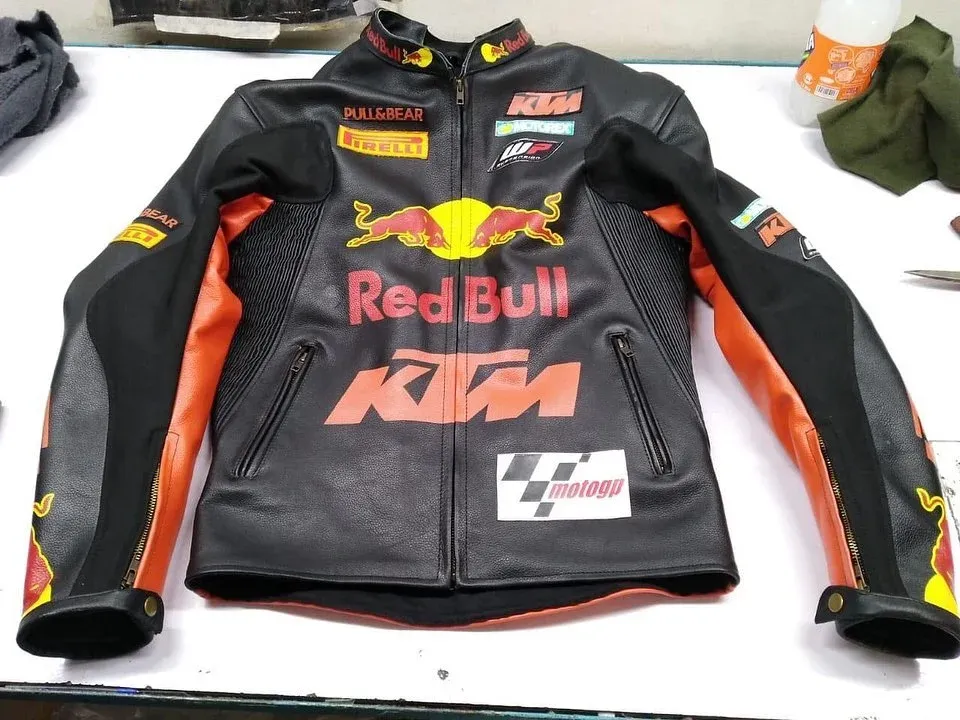
Ask ten riders in a paddock which leather is best and you’ll get ten answers, usually with a crash story attached. Kangaroo vs cowhide is one of the most common questions people have when buying a race suit. Most of the answers online fall into one of two camps: “kangaroo is massively better”, or “it’s all marketing”.
The truth sits in between. Both are good materials. They make different trade-offs, and the right one depends on how and where you ride. Here’s an honest comparison.
The short answer
- Cowhide is the proven, tough, cost-effective default. Most road and track leathers ever made are cowhide, and a well-built cowhide suit protects you properly.
- Kangaroo is lighter and more supple for a similar level of abrasion resistance. That’s why many racers use it. It costs more and needs a bit more care.
If you mostly ride on the road and do a few track days a year, cowhide is the sensible choice. If you’re on track often, race, or care about every gram and every bit of comfort over a long day, kangaroo is worth considering.
Why leather at all?
Before comparing them, it’s worth remembering why race suits are leather in the first place. In a slide, the outer shell has to resist abrasion (being ground away by the tarmac) and tearing (seams and panels being ripped open). It also has to stay in one piece long enough for you to stop. Good leather does this well, and it’s comfortable and long-lasting too. Armor deals with the separate job of absorbing impacts. Leather and armor work as a team.
How the two leathers differ
Structure and strength
The main difference is in the hide itself. Kangaroo skin has its collagen fibres running in a very even way, parallel to the surface, and it has fewer of the sweat glands and other features that break up the fibre structure in cattle hide. Leather-industry research and suit makers’ guides point to this as the reason kangaroo keeps more of its strength when it’s split thin.
In practice, that means kangaroo can be used thinner than cowhide for a similar level of protection. That’s where its weight advantage comes from.
Thickness
You’ll often see suit makers quote cowhide for race suits at roughly 1.1-1.4 mm, and kangaroo thinner, around a millimetre. Exact figures vary from maker to maker and from hide to hide, so treat these as typical ranges, not rules.
Our standard suits use top-grain cowhide leather, 1.2-1.3 mm, which sits right in the usual range for race leathers. Top-grain means the strong outer layer of the hide, not a weaker split layer underneath.
Weight
This is kangaroo’s biggest real-world advantage. Because the leather can be thinner, a kangaroo suit is noticeably lighter than a cowhide one built the same way. Over a full track day, or a race weekend in the heat, less weight means less fatigue. Professional racers notice this, and so do keen track-day riders.
Comfort and feel
Kangaroo is softer and more supple from new. It needs less breaking in and moves with you more easily. Cowhide starts firmer and takes a few rides to loosen up. Once broken in, though, a good cowhide suit fits like an old glove, and plenty of riders love that feel.
Abrasion and crash behaviour
Here’s where it pays to be careful. Kangaroo has a strong reputation, and for its weight it performs very well. But “kangaroo” doesn’t mean “indestructible”. Thicker cowhide holds up well too, and some makers point out that cowhide can cope better with repeated slides over the years. How a suit survives a crash depends on many things: the speed, the surface, how you land, the stitching, the armor, and the fit. The leather type is only one part of that.
So don’t buy kangaroo because you think it makes you crash-proof. Buy it because you want a lighter, more supple suit and you’re happy to pay for that.
Long-term durability and shape
Both leathers last for years if you look after them. Kangaroo can lose a little of its shape over a long time with heat and heavy use, which is one reason some builders use it in key areas rather than on every panel. Cowhide is known for holding its shape well. The most common cause of worn-out leathers in either material isn’t the hide. It’s poor storage (damp, folded, crushed in a kit bag) and poor cleaning.
Care
- Cowhide is forgiving. Wipe it down, let it dry naturally, and condition it now and then.
- Kangaroo needs a bit more attention: clean it gently with cool water and a leather-safe cleaner (never harsh solvents), condition it regularly, and store it on a wide hanger.
If you’re the type who throws your leathers in the van and forgets about them until next month, cowhide will put up with you better.
Cost
Kangaroo costs more. It’s a more expensive hide to source and work with. Whether that’s worth it comes down to how often you ride on track and how much the weight and comfort matter to you.
Side-by-side
| Cowhide | Kangaroo | |
|---|---|---|
| Typical race-suit thickness | Around 1.1-1.4 mm (ours: 1.2-1.3 mm top-grain) | Thinner, around 1 mm (varies by maker) |
| Weight | Heavier | Lighter |
| Feel from new | Firm, needs breaking in | Soft and supple |
| Abrasion resistance | Very good at race thickness | Very good, even at a thinner gauge |
| Holds shape over the years | Very well | Well, but can soften more with heavy use |
| Care needed | Low | Medium |
| Cost | Lower | Higher |
| Best for | Road riding, occasional track days, fixed budget | Frequent track days, racing, riders who want the lightest kit |
What about stretch panels and armor?
Whatever leather you pick, the rest of the suit matters just as much. On our suits that means:
- Stretch Kevlar panels (standard), with an optional Schoeller Keprotec upgrade, at the sleeves, cuffs and crotch, plus expansion panels on the legs, so the suit moves with you.
- CE-certified armor (Level 1 and Level 2) at the shoulders, elbows, knees and back, all removable.
- External protection on the shoulders, elbows and knees, removable knee sliders, and double and triple stitching at stress points.
A light kangaroo suit with poor stitching or badly placed armor is worse than a well-made cowhide suit that fits properly. Fit matters most of all. Armor only works if it’s sitting where your joints are. Check our Size Guide, or choose custom sizing from your measurements.
So which should you choose?
Go cowhide if:
– You mostly ride on the road, with a few track days a year.
– You want tough, proven leathers on a sensible budget.
– You don’t want to fuss over maintenance.
Go kangaroo if:
– You’re on track regularly or racing.
– Weight and comfort over a long day really matter to you.
– You’re happy to pay more and look after the suit properly.
Every suit in our MotoGP replica collection comes in top-grain cowhide as standard, with kangaroo available as an upgrade. You choose on the product page. For the bigger picture on choosing a suit (one-piece vs two-piece, armor, fit and options), read our MotoGP Replica Leather Suits buying guide.
Shopping for a particular rider? Our Marc Marquez, Jorge Martin, Fabio Quartararo, Pecco Bagnaia, Valentino Rossi and Pedro Acosta pages put all of their replicas in one place.
Still on the fence? Send us a message and tell us how you ride. We’ll give you a straight answer, even if it’s “save your money and stick with cowhide”.
2 thoughts on “Kangaroo vs Cowhide Leather for Race Suits”